When to buy clothes in the UK: the short answer
AI-generated generic editorial illustration — not a retailer product photo and does not depict the reviewed product or service. Editorial illustration supporting this section.
Timing your purchases around UK sales can lower what you pay, but it is only one lever for value. Your consumer rights, a retailer's returns terms and getting the size right matter just as much, because a bargain that doesn't fit or can't be sent back is rarely a bargain.
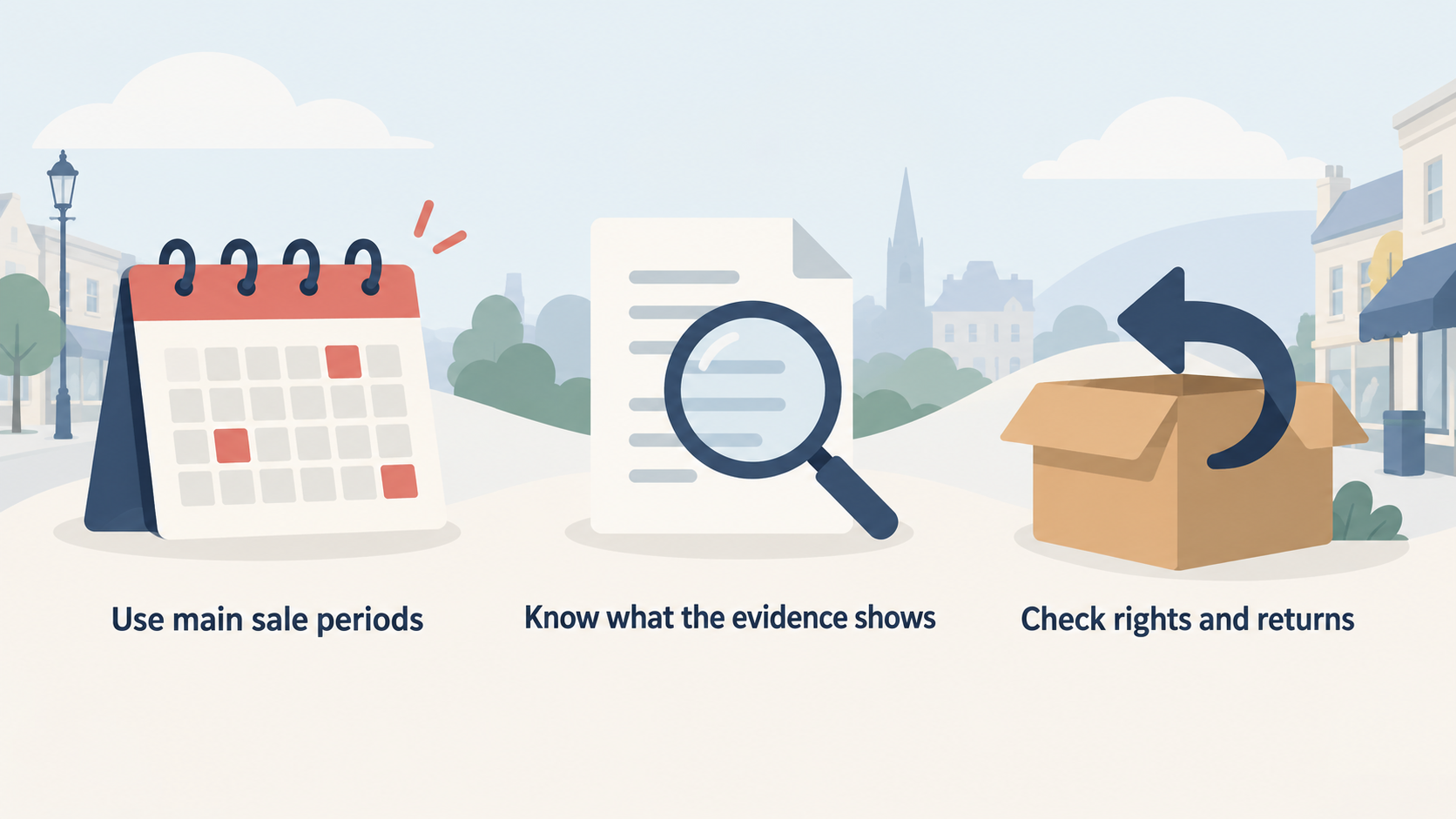
In practice, the approach has three parts:
- Use the main sale periods. Which? refers to the "Boxing Day and January sales" as the key winter sales window, and says deals on many products follow trends tied to the time of year and when products were launched.
- Know what the evidence shows. Official inflation statistics describe prices overall. They do not forecast the price of a particular jumper or pair of trainers.
- Check rights and returns before you pay. GOV.UK sets out where consumer protection applies, and each retailer's own returns policy decides how safely you can try something at home and send it back.
This guide is editorial analysis of official and independent sources. It is not based on hands-on try-on testing. If you are new to buying online, measure yourself and check our size conversion and measuring guidance before the sales begin.
What official inflation data says about clothing prices
The Office for National Statistics (ONS) publishes the UK's official inflation figures. Its January 2026 consumer price inflation bulletin reported that the Consumer Prices Index (CPI) rose by 3.0% in the 12 months to January 2026, down from 3.4% in December 2025. On a monthly basis, CPI fell by 0.5% in January 2026, compared with a fall of 0.1% in January 2025.
It is tempting to read that monthly fall as a January sale effect. The excerpt we reviewed does not support that. The ONS names transport, and food and non-alcoholic beverages, as the largest downward contributors to the monthly change. It does not attribute the fall to clothing.
The bulletin also says core CPI goods annual inflation fell from 2.2% to 1.6%. That shows goods prices cooling, but it is a broad measure and not a clothing-specific figure.
How to use the ONS data sensibly
- Treat headline CPI as context, not as a clothing price tracker.
- Before claiming that clothes get cheaper in January, look at the clothing and footwear detail in the full ONS release and its accompanying data.
- Check recency. The ONS page itself carries the notice "This is not the latest release". It was published on 18 February 2026, so newer bulletins will have followed. Use the latest release when you research.
UK sale seasons and when prices tend to fall
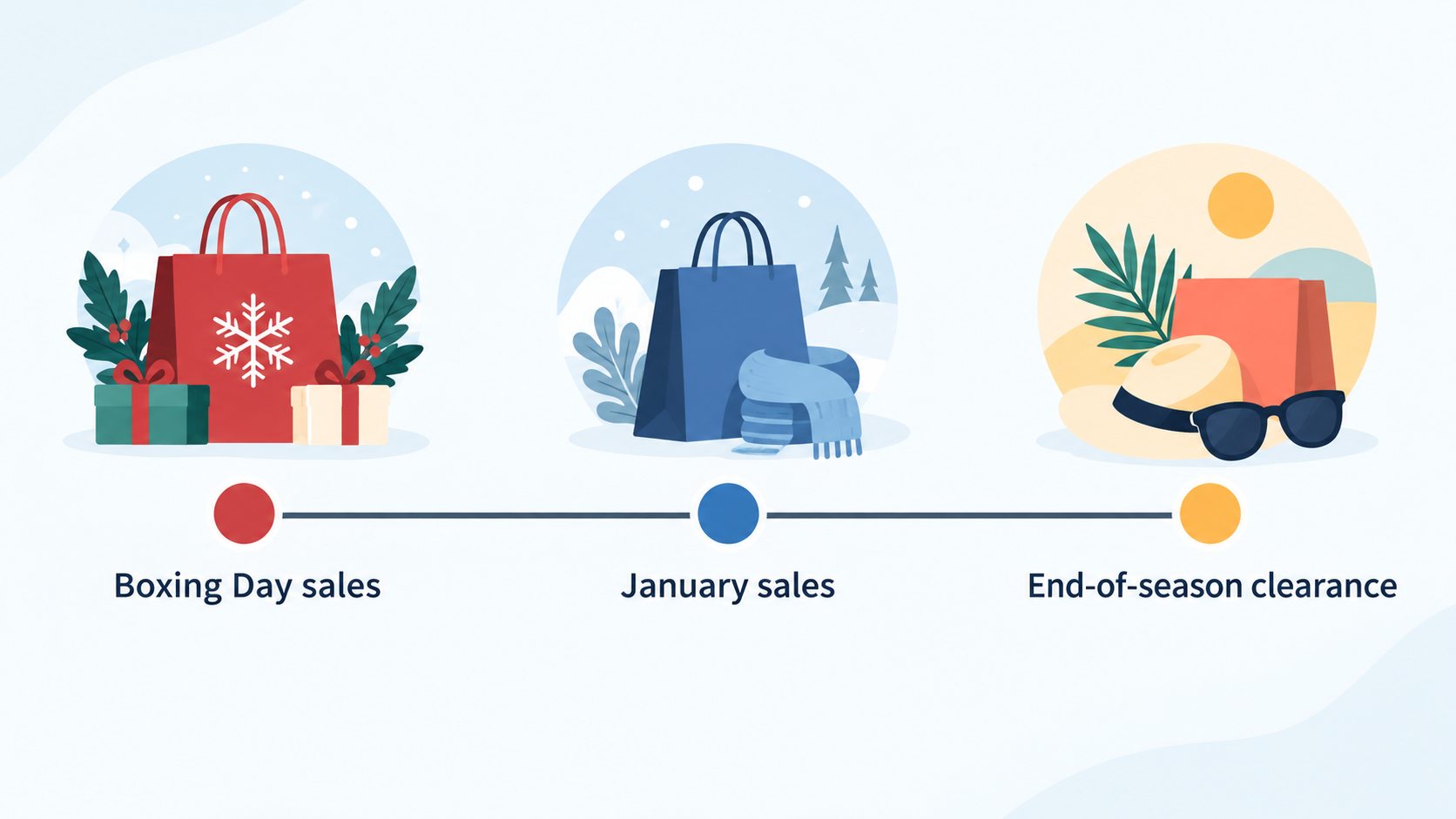
AI-generated generic editorial illustration — not a retailer product photo and does not depict the reviewed product or service. A single simple timeline marking only the sale windows the section names, so readers can see where price falls tend to occur.
The sources point to a small number of useful timing windows.
Boxing Day and January sales. Which? describes the winter sales as the "Boxing Day and January sales", with thousands of retailers offering discounts during the annual sales season. Its December 2025 guide to shopping safely in the sales is likewise framed around "Boxing Day and beyond".
Product-cycle timing. Which? says deals on many products can follow trends depending on the time of year and when products were launched. The examples in the excerpt we reviewed are headphones, TVs and laptops, not clothing. The principle is useful for clothes too: seasonal ranges and new launches tend to shape when older stock is reduced. But we have no source giving specific clothing price movements.
End-of-season clearance. Retailers commonly clear seasonal stock as new ranges arrive. None of the sources we cite gives dates or discount levels for this, so treat it as a general pattern and check individual retailers' own sale pages.
Why timing matters. Which? lists "shopping at the wrong time" among common sales mistakes that can leave shoppers paying more.
Read the dates. The Which? mistakes article dates from December 2022. Its timing principles are general guidance, not current price data. Likewise, any range for clothing or footwear categories should be read as a general pattern, not a guaranteed discount level.
Where timing your purchase pays off
Waiting can improve value when you are buying at the right point in the product or sale cycle. Which? says that buying at the right time can mean paying less, and that buying at the wrong time can mean paying more.
Our reading of that guidance is that it works best for:
- Planned purchases. Staples you already know you need, such as a winter coat or a pair of boots, are easier to time than something you need next week.
- Seasonal items. If you can wait for the end of a season, you may find more choice of reductions.
- Purchases with a safety net. Some retailers extend returns windows around sale periods. For example, White Stuff's returns page states that it has extended its returns policy until 10 January 2027. A longer window gives you more time to check fit and quality at home.
This is a modest claim by design. Waiting does not guarantee a lower price on any specific item, and popular sizes may sell out. Judge each purchase against what you are prepared to pay, not against a headline discount.
Where sale timing falls short
Timing has real limits.
- Statistics are aggregate. Official figures describe price movements across the economy. They do not predict discounts on a given item.
- The evidence is dated. The ONS release we cite is not the latest, and the Which? timing article is from 2022. Check for newer information.
- Sale terms matter. Which? warns that glossing over terms and conditions can leave shoppers paying more, and that flashy discount signs and too-good-to-be-true bargains can be traps.
- Returns extensions are limited. White Stuff's extension has an end date and applies only to that retailer. Another shop's policy may be different, so check each one.
- Stock can be patchy. In our view, sale stock is often limited, which raises the cost of choosing the wrong size. That is a practical consideration rather than a sourced finding.
- Scams spike around sales. See the section on fake shops below.
If a sale item can't be returned easily, or you are unsure of your size, the saving may not be worth the risk.
Getting the right size when you buy in a sale
AI-generated generic editorial illustration — not a retailer product photo and does not depict the reviewed product or service. A short numbered checklist of the steps the section gives for judging whether a sale item is worth buying for fit.
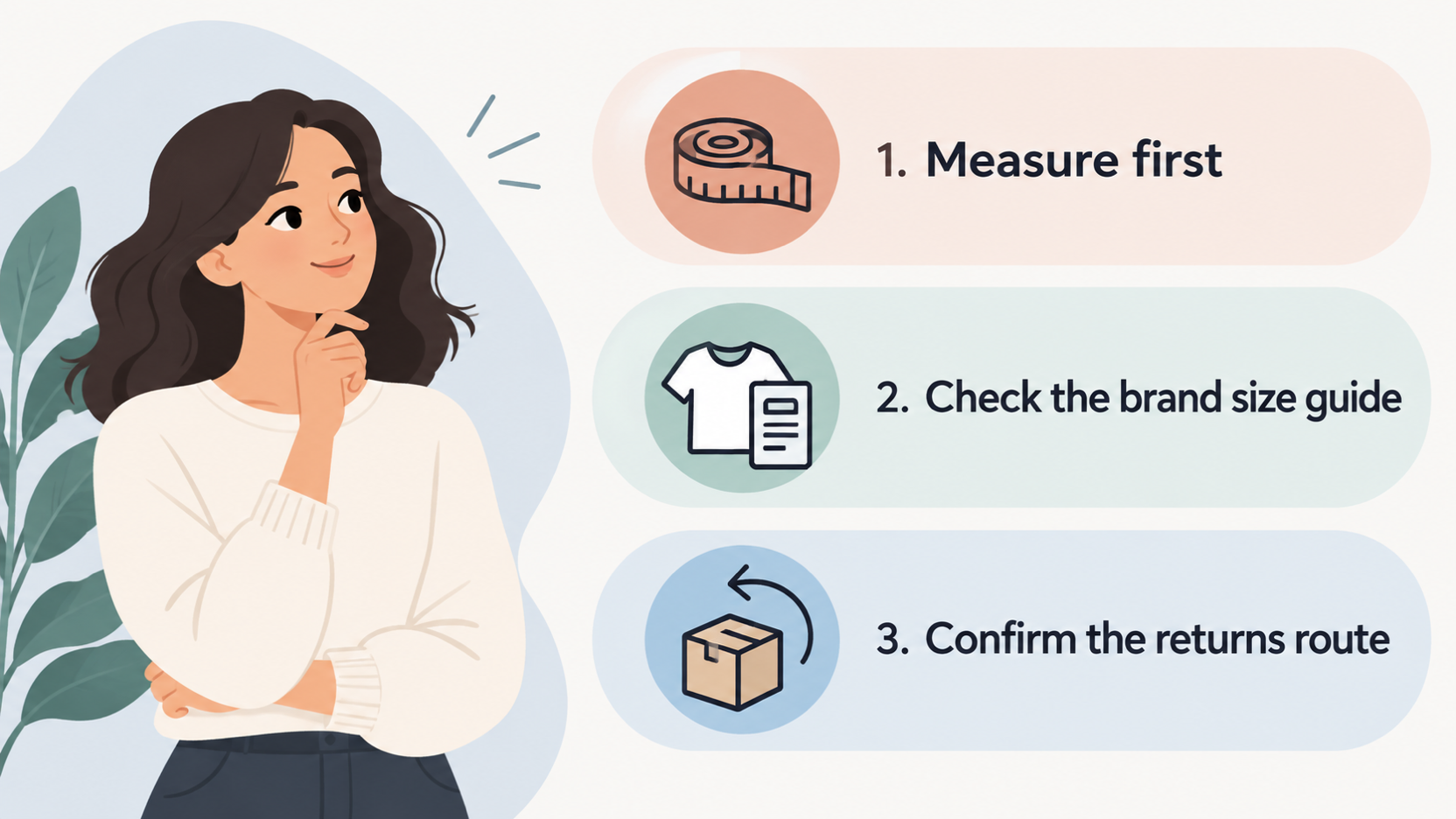
Sale stock is often limited, so there may be no second chance to swap for another size. This framework helps you decide whether a reduced item is worth buying:
- Measure first. Take your own measurements before the sales begin, not while a countdown timer is running.
- Check the brand's own size guide. Sizing varies between retailers, so use the retailer's guide for the specific item. Where a retailer offers petite, tall or plus ranges, check those guides too. White Stuff's page, for example, lists petite dresses and tall men's clothing categories. We do not make claims about how any brand sizes beyond what its official guides state.
- Confirm the returns route. A returns policy decides whether a wrong size costs you money. Check the window, whether returns are free and whether sale items are included.
Our measuring guide and the US/UK/EU size conversion guide can help with the first two steps. We have not tried these items on ourselves. This is guidance built from published sources.
Your consumer rights when buying clothes
GOV.UK says the law protects your consumer rights when you buy goods, services or digital content, whether remotely or in person. You can get help if you are treated unfairly or when things go wrong. The problems it lists include faulty goods, poor service, counterfeit goods and fraud.
Where to get advice
- England and Wales: Citizens Advice.
- Scotland: Advice Direct Scotland.
- Northern Ireland: Consumerline.
These helplines can give advice and refer your complaint to local Trading Standards Officers, who may investigate on your behalf. GOV.UK also says they can share complaint information nationally with enforcement authorities, including Trading Standards, the Competition and Markets Authority and regulators. You can also get information about refunds, repairs and making a complaint from Which?.
Ombudsman routes. An ombudsman investigates complaints about organisations for free, and may be able to help you resolve a complaint without going to court. Different industries have different ombudsmen, and the Ombudsman Association can help you find the right one.
A note on time limits. The GOV.UK page we reviewed does not set out statutory deadlines for returns or refunds, and we do not quote any here. Check the full GOV.UK guidance or contact a helpline for the current position on your purchase. Our guide to returns and refunds for online fashion orders covers the practical steps.
Checking returns policies before you buy in the sales
A retailer's returns policy is separate from your statutory rights. Which? lists skipping returns policies as a common sales mistake, so read the terms before you buy.
A dated example. At the time of the source page we reviewed, White Stuff's returns page said:
- It had extended its returns policy until 10 January 2027.
- Free click and collect was available from any of its 125 UK shops.
Policies change, and an extension applies only to that retailer, so check the current terms on the retailer's own page before purchasing.
What to check
- Window. How long do you have, and does it start on the order date or the delivery date?
- Sale items. Are reduced items covered on the same terms as full-price ones?
- Cost and method. Is returning free? Can you return in store or via click and collect?
- Refund type. Do you get money back, a credit note or an exchange only?
- End date. If a policy has been extended for the sales, when does it stop?
Keep your order confirmation and check that your size is right before you buy. Our brand-by-brand sizing guides for Uniqlo, Next, White Stuff and Sweaty Betty can help with that step.
Avoiding sale scams and fake shops
AI-generated generic editorial illustration — not a retailer product photo and does not depict the reviewed product or service. A short numbered checklist of the sale-scam warning signs the section describes, drawn from the Which? guidance.
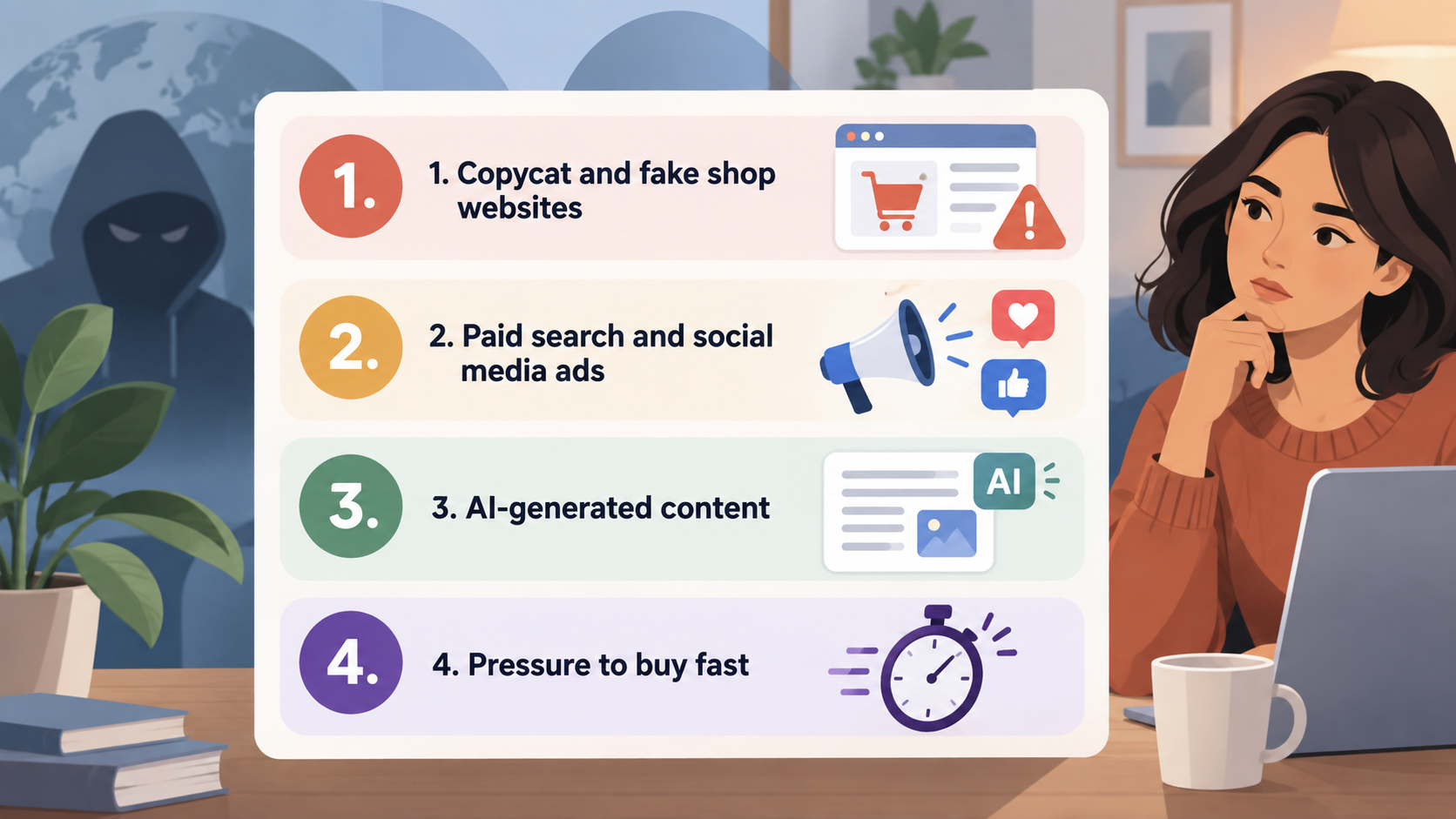
Which? warns that sale periods are a prime time for online fraud. Many incidents go unreported, so the true scale is likely to be higher than reported figures suggest. Its guidance points to these warning signs:
- Copycat and fake shop websites. Which? says fraudsters sell and trade "phishing kits" that copy content and images from genuine retailers' sites.
- Paid search and social media ads. Fake sites are promoted through paid search and social media advertising, and mass emails. Which? reported that scammers bought Google ads for a fake Costco website.
- AI-generated content. Which? says scammers use AI-generated content to sell non-existent stock or cheap knock-offs.
- Pressure to buy fast. Limited-time offers can be used to rush you into buying before you stop to check.
Some fake sites even claim endorsement from famous faces. Go to a retailer by typing its address yourself instead of clicking an ad, and treat unusually deep discounts with caution.
If something goes wrong, GOV.UK points to Citizens Advice and other organisations for help with fraud and rogue traders.
Frequently Asked Questions
When is the best time of year to buy clothes in the UK?
The sources we reviewed don't name a single best time for clothing. Which? refers to the Boxing Day and January sales, and says deals on many products follow the time of year and launch timing. Its examples are not clothes, and its main timing article is from 2022. Use those periods as a starting point and compare prices on the items you want.
Do official statistics show clothes get cheaper in January?
Not from the excerpt we reviewed. The ONS January 2026 bulletin reported CPI falling 0.5% on the month, but named transport and food as the largest downward contributors. For clothing, check the clothing and footwear detail in the full release. These are overall price movements, not forecasts for a specific item, and the release is not the latest.
Can I return sale items if they don't fit?
It depends on the retailer. Retailer policies are separate from statutory rights, so read the terms for sale items before you buy. White Stuff, for example, stated that it extended its returns policy until 10 January 2027, but that applies only to that retailer and may change.
Who do I contact if sale clothing is faulty or the seller does not respond?
GOV.UK says to contact Citizens Advice in England and Wales, Advice Direct Scotland in Scotland, or Consumerline in Northern Ireland. They can give advice and refer complaints to Trading Standards. In some industries, an ombudsman can investigate complaints for free.
How can I tell if a sale website is fake?
Which? says fake sites can copy genuine retailers' content and images, and are promoted through paid search, social ads and mass emails, often with limited-time urgency. Be wary of very deep discounts and pressure to buy fast. Type the retailer's address yourself rather than clicking an ad.
If you are comparing sizes across brands, our size conversion guide is a good place to start before you buy.
Sources
Related reading
- How to spot genuine clothing deals and avoid misleading discounts
- Sweaty Betty sizing review: leggings and sports bra fit assessment
- Best high-street jeans for petite, regular and tall leg lengths: evidence-led top choices
- How to choose your clothing size online: measuring yourself and converting US, UK and EU sizes
Editorial information: About our editorial team · Read our editorial policy · Read our affiliate disclosure.