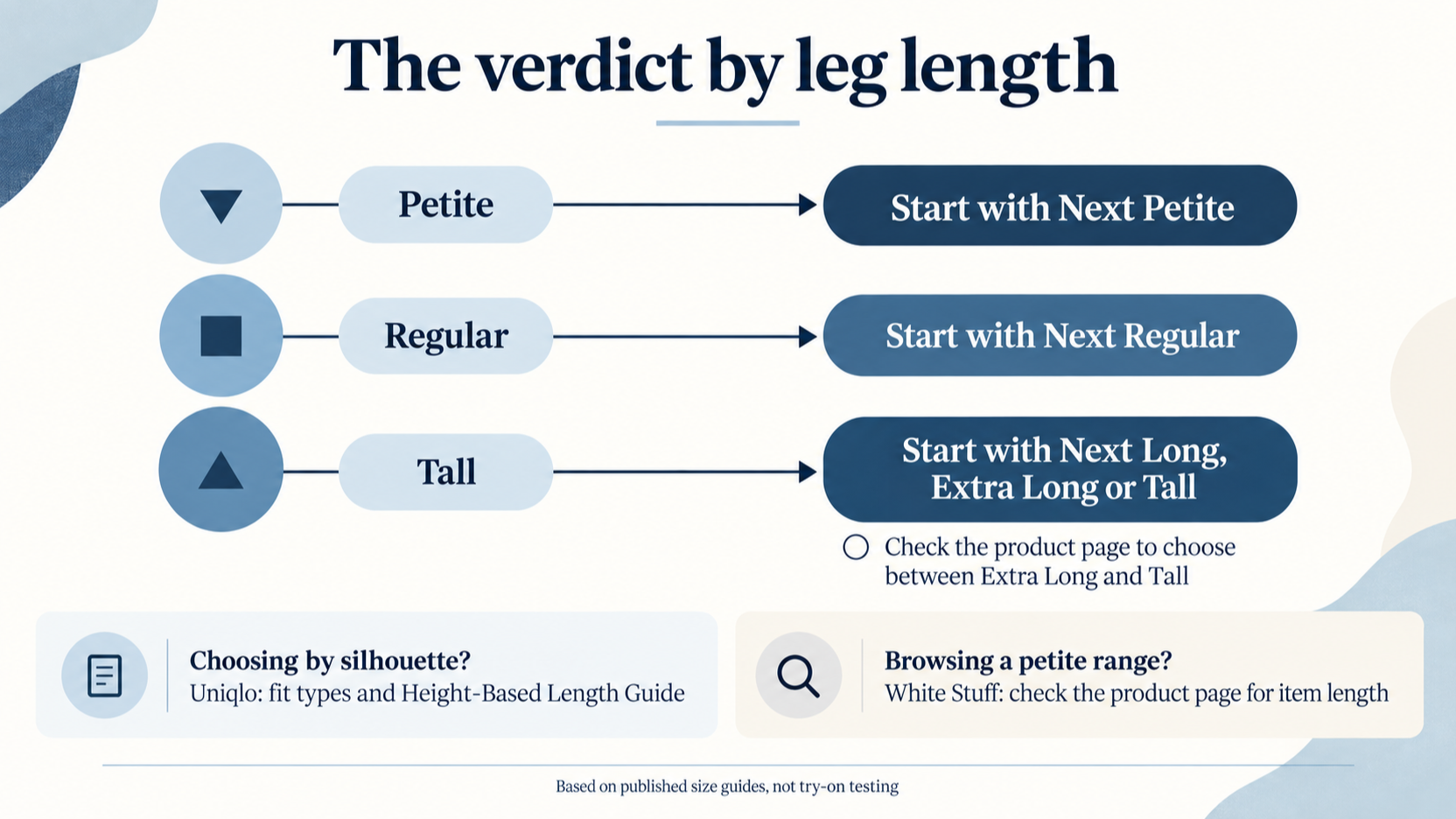
The verdict by leg length
AI-generated generic editorial illustration — not a retailer product photo and does not depict the reviewed product or service. Editorial illustration supporting this section.
If you want a numbered inseam to work from, start with Next. Its women's sizing guide is the clearest leg-length system in the sources we reviewed: five named lengths (Petite, Regular, Long, Extra Long and Tall), each tied to a height band and an inseam measurement.
- Petite (about 4'11" to 5'3"): start with Next's Petite length, a 69 cm inseam.
- Regular (5'3" to 5'6"): start with Next's Regular length, a 74 cm inseam.
- Taller than 5'6": start with Next's Long (79 cm) if you are 5'6" to 5'10", or its Extra Long (84 cm) or Tall (89 cm) lengths if you are 5'10" or over.
Uniqlo is the better route if your main question is silhouette rather than a fixed length. Its guide explains regular, slim-fit, relaxed-fit and oversized cuts and points shoppers to a Height-Based Length Guide, but the material we reviewed does not set out a single inseam ladder. White Stuff is a viable option with a dedicated denim fit guide and a petite category, but the page we reviewed offered little jeans-specific data, so confirm sizing on the product page before you order.
This verdict rests on published size guides and independent editorial context. It is not based on trying the jeans on, and it judges how usable each brand's sizing information is, not how the denim feels or wears over time.
How inseam, height and fit work on the high street
Two ideas explain most online jeans mistakes: inseam is not the same as size, and a size label is not the same as a fit.
The inseam is the length of the inside leg of the jeans, from the crotch seam to the hem. A height band is the range of heights a brand says that length is designed for. When a brand publishes both, as Next does, you can match length to height instead of guessing. Who What Wear's tall-jeans roundup makes the underlying point plainly: both petite and tall frames require different inseams, and while tailoring is always an option, a correct fit straight off the rack is better.
The fit type matters just as much. Uniqlo states that its products may fit differently even when they share the same size label, because each item is designed with a specific fit, such as regular, slim-fit, relaxed-fit or oversized. It recommends checking the product measurements and its Height-Based Length Guide to see where a garment may sit.
A single number never tells the whole story. Editors in our sources talk about cuts, rises and washes, stiffer denim for a more structured look, and stretch denim as separate choices. A cropped slim stretch pair and a stiff straight-leg pair with the same inseam can sit very differently on the leg. Treat an inseam as a starting point, then check the hem position, rise and fabric on the product page.
How we compared brands without try-on testing
We did not try any of these jeans on, and nothing here should be read as hands-on testing. The comparison is built from published information, ranked by how much weight each source deserves.
Primary evidence comes from official brand guides: Next's women's sizing guide, Uniqlo's "How to choose your size" help article, and White Stuff's denim fit guide page. Independent editorial context comes from Who What Wear (its UK high-street jeans, petite jeans and tall jeans roundups) and Marie Claire's best-jeans guide. These roundups carry affiliate-link disclosures and reflect each editor's own body and taste, so they inform the alternatives rather than decide the verdict.
We compared brands on five criteria:
- leg-length coverage
- availability of height guidance
- waist-to-hip data
- size range
- how clearly fit types are explained
A brand scores well when a reader can find a number or a tool that answers the question without guessing. That is a judgement about information quality, not about the garments themselves.
The shortlist at a glance
AI-generated generic editorial illustration — not a retailer product photo and does not depict the reviewed product or service. Help readers choose between Next, Uniqlo and White Stuff by what each publishes on leg length, waist-to-hip fit, fit types and size range.
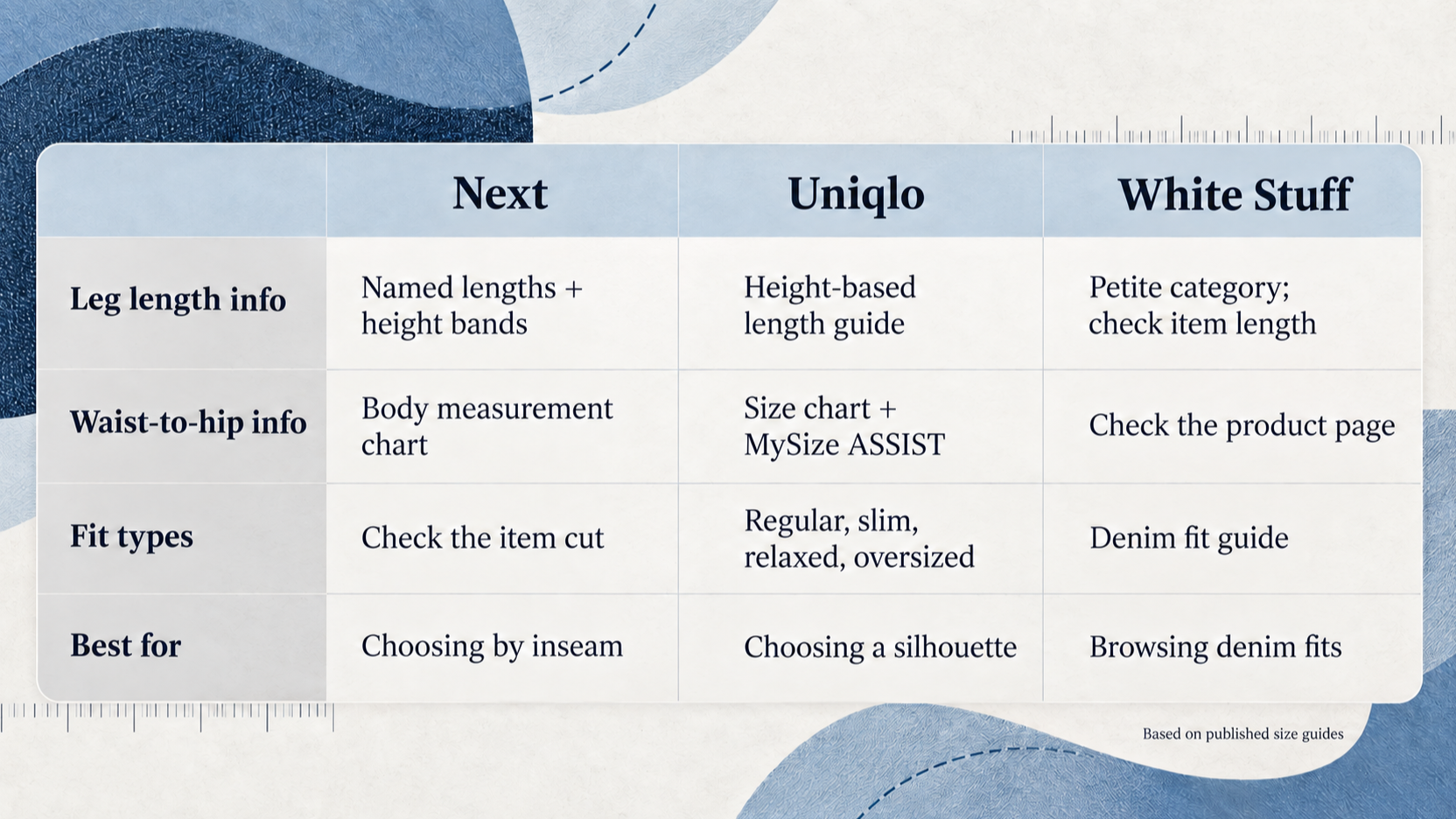
| Next | Uniqlo | White Stuff | |
|---|---|---|---|
| Leg-length information | Five categories, each with a height band and an inseam | Height-Based Length Guide; no single inseam ladder in the material reviewed | Not visible in the page reviewed |
| Waist-to-hip information | UK 4 to 26 body-measurement chart (bust, waist, hips) | Size chart, product measurements and comparison tools | Not visible in the page reviewed |
| Fit types | Individual styles vary; check the product page | Regular, slim, relaxed and oversized explained | Dedicated denim fit guide page |
| Best for | Readers who want a numbered inseam | Readers choosing between relaxed and slim silhouettes | Readers who like to shop a brand's petite range and then verify on the product page |
Next offers the most usable numbers. Its chart lists UK 4 to 26 with bust, waist and hips, and its jeans table gives five leg-length categories with height bands and inseams.
Uniqlo offers the strongest set of tools: fit-type explanations, a Height-Based Length Guide, MySize ASSIST, a size chart and a product-size comparison feature.
White Stuff has a dedicated denim fit guide page and a petite women's category. The excerpt we reviewed gave no inseam or waist-to-hip figures, so treat it as a brand to check rather than one we can describe in detail.
Where the published sizing is strongest
Next's inseam ladder is the standout. It runs from a 69 cm (27.5 in) Petite inseam through Regular at 74 cm (29 in) and Long at 79 cm (31 in) to Tall at 89 cm (35 in). Because each length comes with a height band, such as Petite at 150 to 160 cm and Regular at 160 to 167.5 cm, a reader can choose by height first and then confirm on the product page.
Uniqlo's strength is helping you decide what you want before you pick a size. It describes regular, slim, relaxed and oversized fits, and it tells readers to use product measurements, a size chart and a height-based guide to see where a garment will sit. That makes it useful for choosing a silhouette first.
The wider high street has also improved, according to independent editors. Who What Wear's high-street roundup says the days of ill-fitting, saggy pairs are long gone, and it points to Zara's petite-friendly styles and Abercrombie's Curve Love range as examples of better length and size coverage. It is an editor's view, not a measured result, but it supports looking beyond a single brand.
We have deliberately avoided calling any brand "the best". The evidence supports saying which brand publishes the most usable information for a given question, and no more than that.
Petite, regular and tall inseams compared
AI-generated generic editorial illustration — not a retailer product photo and does not depict the reviewed product or service. Walk readers through choosing an inseam length by height group using Next's published bands.
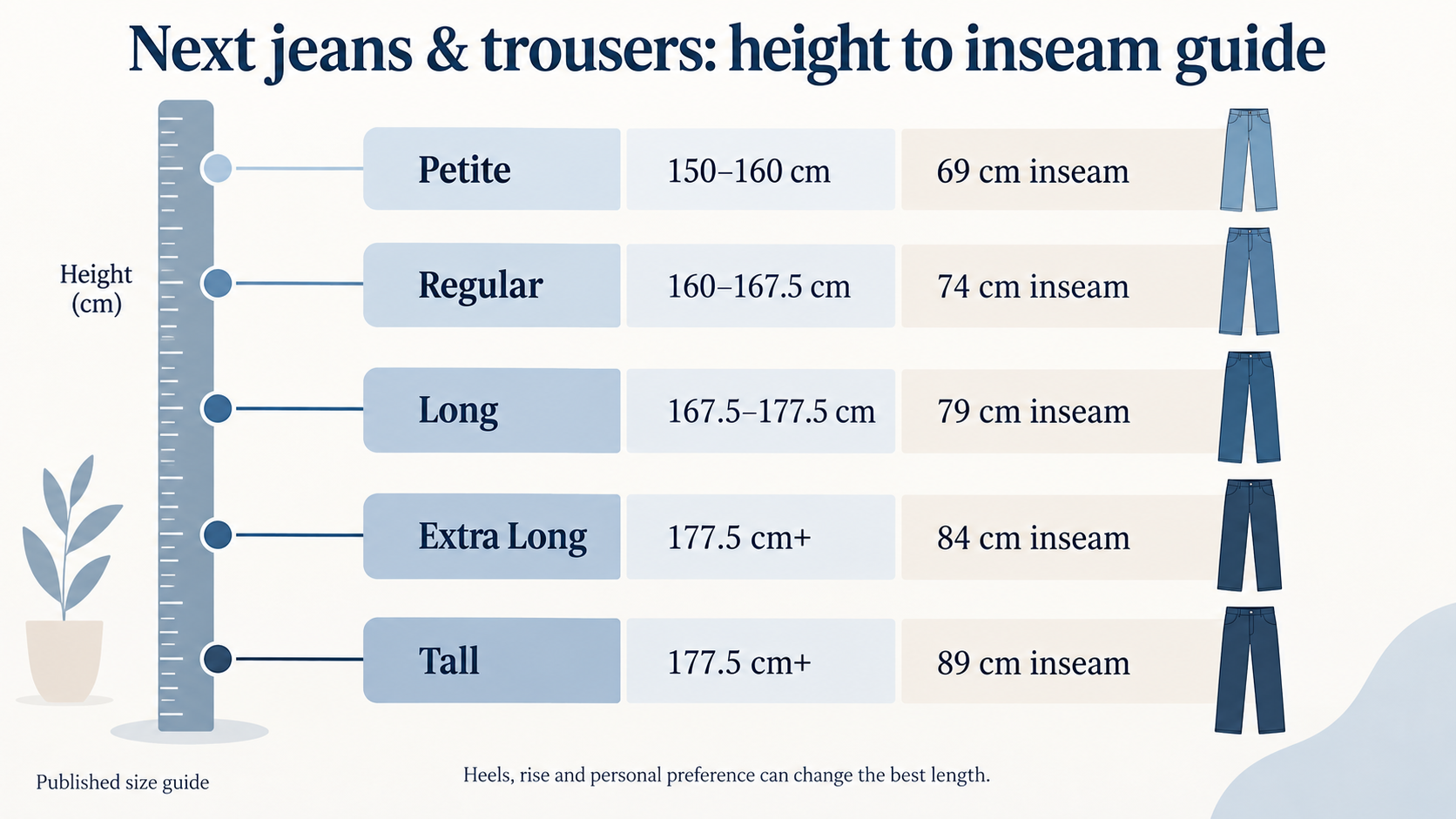
Next's published bands give the cleanest anchor:
| Height | Next length | Inseam |
|---|---|---|
| About 4'11" to 5'3" (150 to 160 cm) | Petite | 69 cm (27.5 in) |
| 5'3" to 5'6" (160 to 167.5 cm) | Regular | 74 cm (29 in) |
| 5'6" to 5'10" (167.5 to 177.5 cm) | Long | 79 cm (31 in) |
| 5'10"+ (177.5 cm+) | Extra Long | 84 cm (33 in) |
| 5'10"+ (177.5 cm+) | Tall | 89 cm (35 in) |
Note that the guide lists the same height for Extra Long and Tall, and the page reviewed does not explain the difference, so check each product's description to see which length it is sold in.
Petite readers. The Who What Wear editor who is 5'2" mentions stiffer denim, a straight-leg cut and baggy styles that are proportionate to height, and describes tailoring as a petite styling tip many swear by. Her picks include ankle and cropped styles such as H&M's Slim Mom Ankle Jeans, Levi's 501 Crop and Arket's Jade Cropped Slim Stretch Jeans.
Tall readers. Who What Wear staff who are 5'7" and up say wide-leg styles are often too short. One 5'11" editor praises a pair for having enough length at the hem, including when wearing a three-inch heel.
Between bands? If you are, say, 5'4" or 5'8", look at the hem position on the product page and think about the finish you want, whether full length or cropped. Heels, rise and personal preference can all change the best length.
Waist, hip and size range checks
AI-generated generic editorial illustration — not a retailer product photo and does not depict the reviewed product or service. Show readers how to use published waist, hip and size range data and when to size by hips rather than waist.
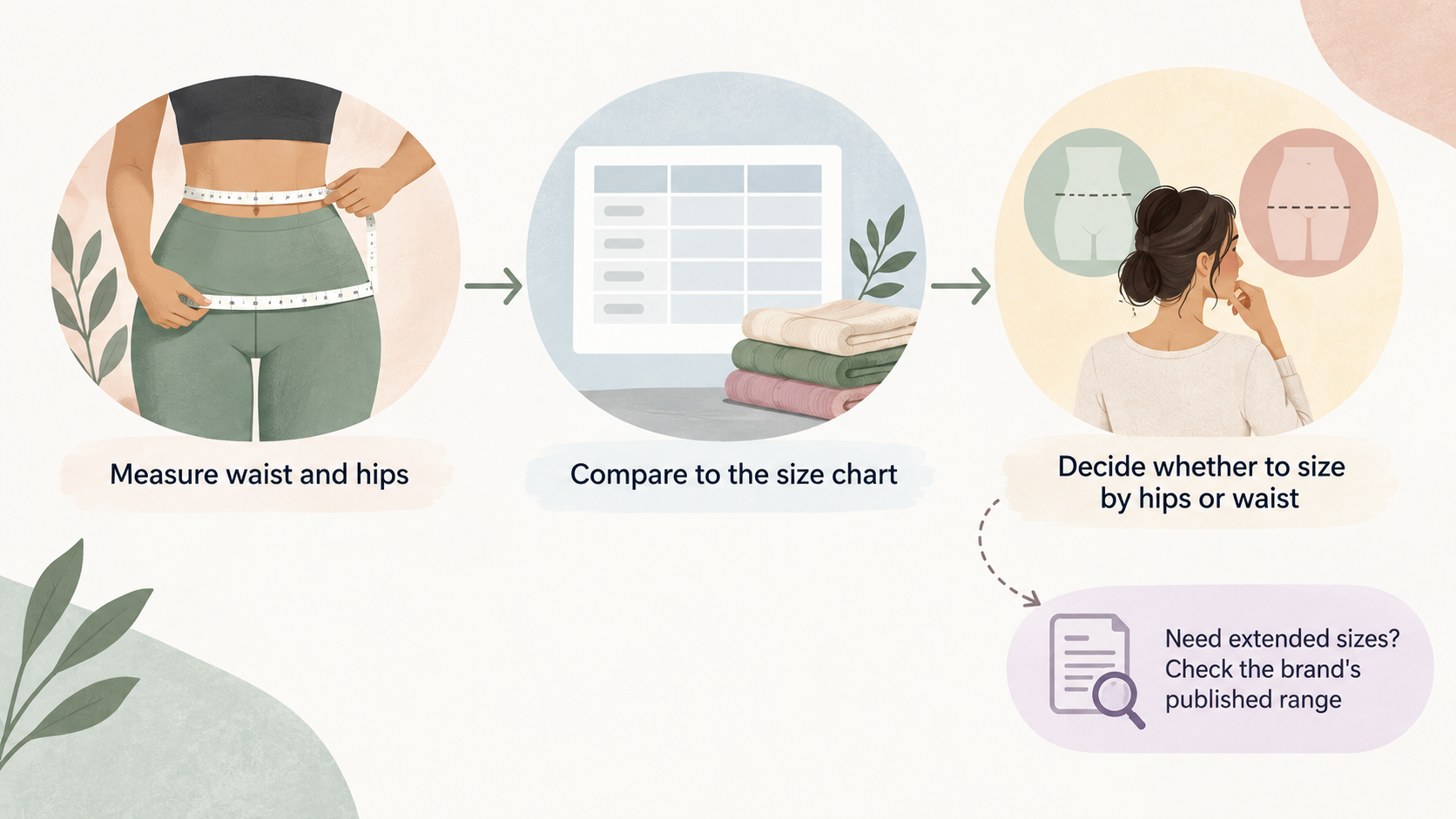
Start by measuring your waist and hips, then compare them with the brand's chart. Next's women's chart lists UK 4 to 26 with bust, waist and hips in centimetres and inches. For example, UK 10 is listed at 86.5 cm bust, 71 cm waist and 95 cm hips, while UK 16 is listed at 99, 84 and 110.5 cm.
The gap between waist and hips is not constant. On those figures it is 24 cm at UK 10 and 26.5 cm at UK 16. If your waist suggests one size and your hips another, compare the whole row of the chart, not just the size label, and look at the product's own measurements where they are given. The sources we reviewed do not say which measurement to prioritise, so we have not made that call for you.
Note that Next's measurements appear in its tops and dresses table, and it describes the chart as a guide to measuring your body. Individual jeans may cut differently.
Uniqlo's tools help you check against something you already own. Its MySize ASSIST and product-size comparison let you compare a garment's measurements with those of a piece that fits you.
Size range is part of the decision. Who What Wear's high-street editor said she scrutinised size ranges when judging brands and highlights Abercrombie's Curve Love range. Check the range a brand publishes for the exact style you want, as extended sizes can vary by product.
Limits of the evidence and what to check
This guide is only as good as the pages it draws on.
- White Stuff: the page we reviewed does not expose jeans-specific inseam or waist-to-hip figures, so check them on the product page.
- Uniqlo: the reviewed material does not publish one inseam ladder. Length depends on the specific item and fit.
- Next: the chart is a body-measurement guide. Individual jeans styles may vary in cut, rise and stretch.
- Editorial roundups: these reflect each editor's body and taste and may include affiliate links.
- Changing details: policies, ranges and prices move. White Stuff's page, for instance, mentioned an extended returns policy, but you should confirm current returns terms and availability before ordering.
A quick pre-purchase checklist: confirm your height band and the inseam on the product page, check the fit type, compare your waist and hip measurements with the chart or garment measurements, and read the returns terms.
Alternatives worth checking
If the shortlist does not suit you, independent editors point to other places to look. These are editorial picks and we have not tested any of them.
Who What Wear's high-street roundup lists H&M, COS, Zara, Reformation, Marks and Spencer, Abercrombie & Fitch, & Other Stories, Mango and Free People among its best high-street jeans stores.
For petite readers, the Who What Wear petite guide names COS Arch Jeans, H&M Slim Mom Ankle Jeans, Levi's 501 Crop and Arket Jade Cropped Slim Stretch Jeans, and it also lists vintage jeans and mentions tailoring.
For tall readers, staff picks include Joe's The Mia High Waist Wide Leg Jeans, chosen for hem length on taller silhouettes.
For browsing by category, Marie Claire's fashion editor groups jeans into straight-leg, horseshoe, white, long, petite, embellished, baggy and vintage styles, which can help if you know the cut you want but not the brand.
Frequently Asked Questions
Why do jeans in the same size label fit differently between brands?
Uniqlo says products with the same size label can fit differently because each item is designed with a specific fit, such as regular, slim, relaxed or oversized. Check the product measurements and any height-based guide rather than relying on the label.
What inseam should I choose if I am 5'4" or 5'8" and between two length categories?
Next's bands put 5'4" in Regular (74 cm) and 5'8" in Long (79 cm), but both heights sit mid-band, so the label is a starting point. Check the hem position on the product page and consider the intended finish, full length or cropped. Heels, rise and personal preference can change the best choice.
Should I size by waist or by hips if my measurements fall in different sizes?
The sources we reviewed do not give a rule. Next's chart lists waist and hips for each size, and the gap between them varies, so compare the full row. Where a brand gives garment measurements, or tools like Uniqlo's product-size comparison, check them against a pair you already own.
Is it worth tailoring jeans, and when should petite readers do it?
Who What Wear's petite editor describes tailoring as a petite styling tip many women swear by, but she also notes it adds hassle and cost. Both Who What Wear guides prefer finding a correct length off the rack. Tailoring is a fallback if a pair fits elsewhere but is too long.
Which brand publishes the most useful jeans sizing information in this comparison?
For a numbered inseam tied to height, Next. For fit types and measurement tools, Uniqlo. White Stuff needs a product-page check. This reflects published information, not try-on testing.
Sources
- Official source
- Official source
- Official source
- Independent guidance
- Independent guidance
- Independent guidance
- Independent guidance
Related reading
- Uniqlo vs Next sizing: which high-street brand fits better for everyday basics
- Uniqlo sizing review: how it fits, size conversion and alternatives
- How jeans should fit: waist, rise, inseam and leg shape explained
- Next sizing review: who its size ranges suit and who should size differently
Editorial information: About our editorial team · Read our editorial policy · Read our affiliate disclosure.